ODM/OEM service
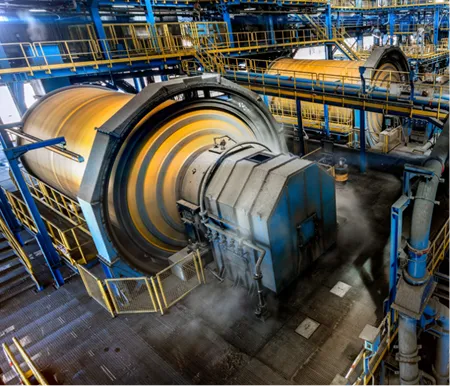
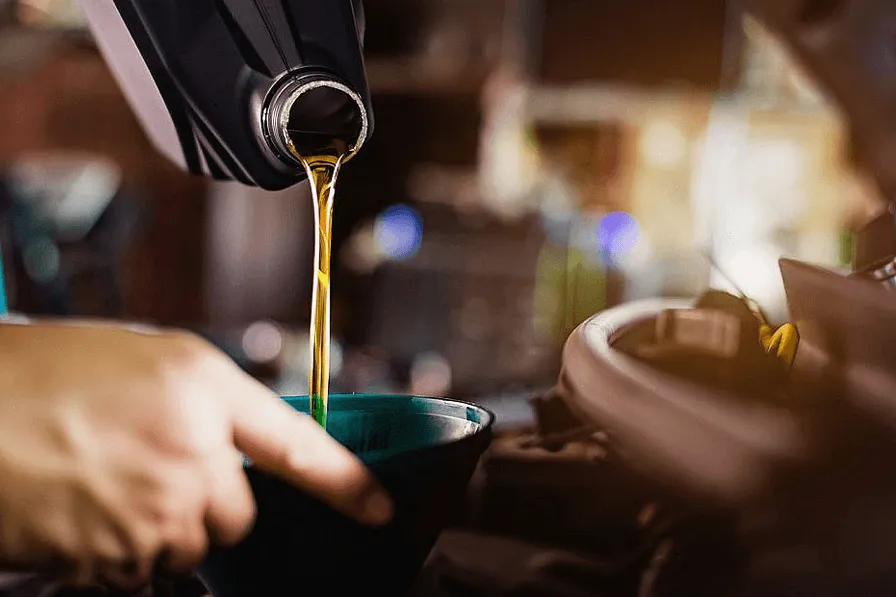
For Taiyi, the ODM/OEM OEM business is not a simple short-term sales behavior, but an important part of project operations in the company's long-term strategic layout. The company has established an industry elite team with rich project experience and profound professional capabilities. It adheres to a pragmatic and innovative service concept and provides customers with a full range of enabling services, covering core aspects such as packaging design, product positioning, selling point extraction, channel planning, and professional training. By integrating upstream and downstream industry chain resources, we deeply explore market potential, help customers expand markets, increase product sales, and achieve mutual benefit and sustainable development for all parties involved.
Customized services
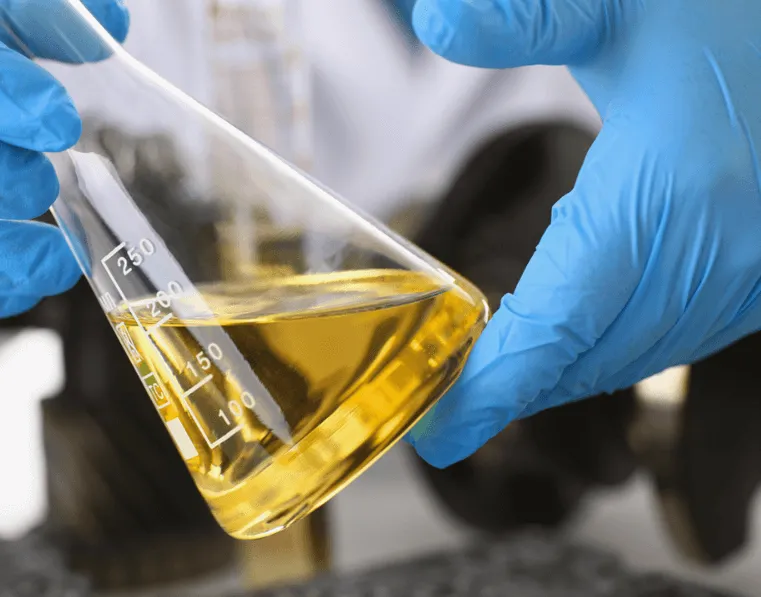
"Flexible customization empowers and accelerates commercial implementation": We abandon the limitations of traditional chemical production and rely on intelligent production processes and agile supply chain management to provide customers with flexible services of "small batches, multiple batches, and high customization". Advanced production equipment supports one-click switching of production parameters, and the flexible production organization model can quickly adjust the production line according to order requirements, achieving a 40% reduction in the cycle from personalized formula development to product delivery. Whether it is the market trial sale of new products or the customization of special lubricants under special working conditions, we can accurately meet customer needs, effectively reduce R&D trial and error costs, and use technology to drive response speed to help customers seize market opportunities. From product development to delivery, we always move forward side by side with our customers, using innovative technology and high-quality services to protect our customers' market competitiveness.
After-sales service
We know that high-quality products are only the starting point for cooperation, and considerate after-sales service is the cornerstone of long-term trust. The company has built a "full-cycle, three-dimensional" after-sales service system to provide customers with all-round protection from product delivery to full life-cycle use.
7×24 hours fast response:The dedicated service hotline and online platform are on call in real time, and the average response time of the technical team is ≤30 minutes to ensure that customer problems are solved as soon as possible;
Professional technical support:The after-sales team composed of more than 10 senior engineers can provide one-stop services such as on-site investigation, equipment debugging, and fault diagnosis, and customize solutions for complex working conditions;
Regular return visits and maintenance:Establish customer-specific files, conduct free equipment testing and lubricating grease performance assessments every quarter, and proactively investigate potential risks;
Success Stories
FAQ:
Q: What are the reasons for the engine oil warning light to come on?
The engine oil light is mainly caused by insufficient oil pressure in the lubrication system, usually due to the following reasons: ① Insufficient oil in the oil pan, and check whether there is a loose seal causing oil leakage. ② The engine oil is diluted by fuel or the engine is overloaded and the operating temperature is too high, causing the oil viscosity to become thinner. ③ The oil passage is clogged or the engine oil is too dirty, resulting in poor oil supply to the lubrication system. ④ The oil pump, oil pressure limiting valve or bypass valve is stuck and working poorly. ⑤ The matching clearance of the lubricating parts is too large. For example, the crankshaft main bearing journal and bearing bush, connecting rod journal and bearing bush are severely worn, or the bearing bush alloy is peeled off, causing the clearance to be too large, increasing the amount of oil leakage, and reducing the oil pressure in the main oil passage. ⑥ The oil pressure sensor is not working properly. ⑦ Failure to correctly select the viscosity of the engine oil based on the climate and engine operating conditions.
Q: Why should engine oil be changed regularly?
Oil will gradually deteriorate during operation. The main reasons are: ① Combustion by-products: such as moisture, acidic substances, soot, carbon deposits, etc.; ② Fuel dilution; ③ Dust and metal particles. These substances are contained in the engine oil. At the same time, the additives in the engine oil will continue to be consumed during use. Failure to change the engine oil on schedule will significantly reduce the oil's protective effect on the engine's anti-wear.
Q: Misconception that the purpose of lubrication is to make the machine run faster
The contact surfaces of relatively moving parts in the machine will produce friction and wear. According to statistics, more than 1/3 of the world's energy consumption is due to friction loss. When the amount of wear exceeds the allowable limit, it directly affects the normal operation and service life of the machine. Therefore, lubricant is added between relatively moving parts to form a lubricating oil film to reduce friction and wear. It can also play a role in cooling, buffering, vibration absorption, and sealing.
The purpose of lubrication is not only to make the machine run faster, but more importantly, to ensure the normal operation of the machine and extend its service life.
Q: Mistakenly thinking that oil can lubricate
The contact surfaces of relatively moving parts in the machine will produce friction and wear. According to statistics, more than 1/3 of the world's energy consumption is due to friction loss. When the amount of wear exceeds the allowable limit, it directly affects the normal operation and service life of the machine. Therefore, lubricant is added between relatively moving parts to form a lubricating oil film to reduce friction and wear. It can also play a role in cooling, buffering, vibration absorption, and sealing.
The purpose of lubrication is not only to make the machine run faster, but more importantly, to ensure the normal operation of the machine and extend its service life.
Q: Mistakenly believe that the greater the viscosity of lubricating oil, the better the lubrication effect
Viscosity is the main indicator of lubricating oil, and its standard is usually determined at a temperature of 100°C to determine the grade of lubricating oil. The higher the grade, the thicker the lubricating oil film formed. Although the friction on the friction surface is reduced, the resistance is increased, the power loss is increased, and the waste of energy is increased.
When the machine is just started, the temperature is low. After working for a period of time, part of the lubricating oil on the friction surface is lost due to the increase in temperature. The lubrication cannot form an effective lubricating oil film, and the oil cannot be quickly replenished to the friction surface of the machine. Due to the high viscosity of the oil, the flow is slow, resulting in greater wear of the machine parts.
Some data show that if the viscosity of lubricating oil is reduced by 1mm2/s, 15% of fuel can be saved. The choice of viscosity should consider factors such as working speed and working temperature. Lowering the viscosity of lubricating oil is one of the current fuel-saving measures.
Q: What is the phenomenon of industrial gear oil deterioration?
① Appearance changes. The color becomes darker and mixed, and emulsification occurs with obvious abrasive particles, mechanical impurities and sludge;
②Viscosity changes. The viscosity of oil containing viscosity index improver decreases due to mechanical shear, while the viscosity increases due to oil oxidation and emulsified sludge;
③Changes in acid value. In oils containing high acid value additives, the decrease in acid value in the early stages of use indicates the consumption of the additives and the increase in acid value in the later period is the result of oxidation to produce acidic products;
④ As the water content increases, the anti-emulsification performance becomes worse, and the hydrolysis of the extreme pressure agent affects lubrication and tooth surface pitting and gluing may occur;
⑤ The insoluble matter of phenylpentane (petroleum ether) increases, which is the result of contamination caused by oxidation products and metal shavings and dust at high temperatures during long-term use of the oil.
Q: Why measure the demulsification performance of steam turbine unit?
Demulsification degree is an important indicator for steam turbine lubricants. It is to measure the time for oil and water to separate under specified conditions. Since water or water vapor may enter due to abnormal system conditions during the operation of a steam turbine or hydraulic turbine, the oil may emulsify. In order to resist the demulsification effect of water on the oil, the steam turbine oil is required to have a certain demulsification ability to ensure that the oil can be used in the equipment for a long time. The short demulsification time indicates that the emulsion can quickly demulsify and separate oil and water. On the contrary, the situation is opposite. Therefore, the shorter the demulsification time of the oil, the better.
At this time, it is necessary to have a vacuum oil filter with demulsification function to filter the oil online to remove a small amount of moisture and impurities that enter the system due to aging or damage of the steam seal.
Q: How to determine the oil change period and oil change index of compressor oil?
The oil change period of compressor oil varies with the structure of the compressor, compressor medium, operating conditions, lubricating oil method and lubricating oil quality. During operation, it is unrealistic to clearly specify how often the oil should be changed. The oil change time can only be determined based on the prevailing conditions. During use, samples should be taken regularly to observe the color and cleanliness of the oil, and the physical and chemical properties of the oil should be regularly analyzed such as oil viscosity, acid value, n-conane incompatible substances, etc.
If one of the following conditions occurs, you should consider changing the oil:
①The color of the oil appears green, or the color number deepens by 4 levels;
②The acid value exceeds 0.5mgkoK/g;
③Viscosity change exceeds 15%;
④N-heptane does not tolerate substances exceeding 0.5%.
Q: Can different types of grease be mixed?
If the base oil types are the same, such as petroleum lubricants or other greases of the same base oil, greases made of different soap bases or thickeners should generally not be simply mixed. Certain types of greases, such as calcium-based grease and sodium-based grease, or lithium-based grease and lithium complex-based grease, can be mixed with each other. Generally, the performance will not change too much and the use will not be affected.
However, extreme pressure grease contains various active components. When mixed with each other, the additives will interfere with each other, causing the colloidal stability or mechanical stability of the grease to deteriorate, affecting its performance. Before different types of grease are mixed with each other, the performance of the mixed grease should be measured to confirm that there is no obvious impact before use.
Q: Can mineral hydraulic oils of the same viscosity be used interchangeably?
cannot. Because although they have the same viscosity, the types are very different. High-pressure systems that require anti-wear hydraulic oil must not be replaced with L-HH or L-HL oil, otherwise it will cause premature scrapping of the equipment oil pump and operational failure. In cold areas, the L-HV and L-HS oil required for hydraulic systems cannot be replaced with L-HM oil of the same viscosity grade, otherwise problems such as difficulty in cold start will occur.

Navigation
Navigation
Contact Info
Contact Info
Telephone:400-993-7066
WeChat:ty4009937066
Address one:No. 251, Yaohua Road, China (Shanghai) Pilot Free Trade Zone
Address two:Zhongmu New District, Zhengzhou City, Henan Province